 EXPLORA SONORA
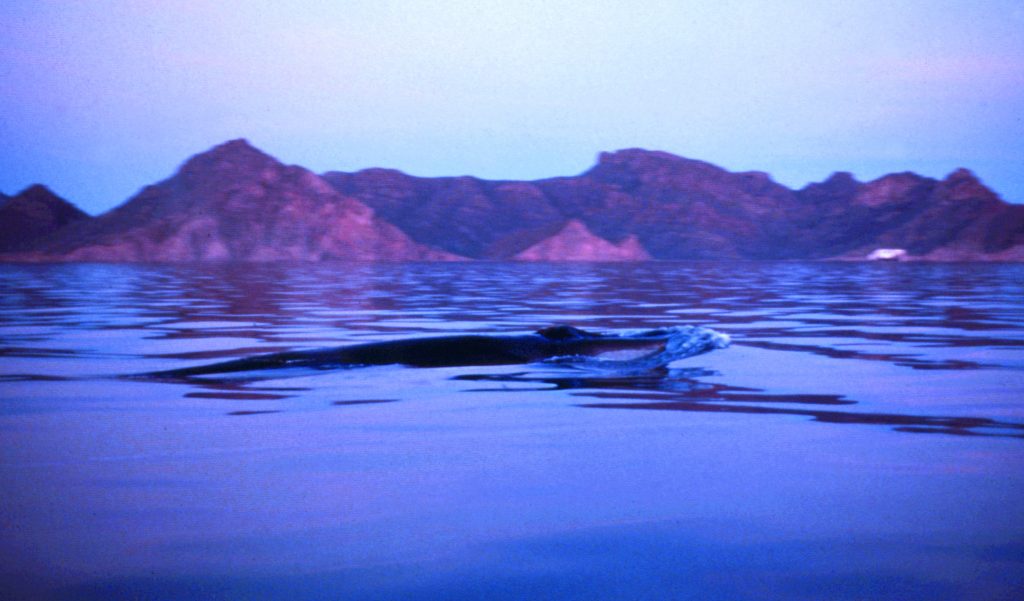
 …The dolphins moved on to continue their games elsewhere, but she stayed with us for twenty minutes, that whale, keeping pace with our five knot crawl up the coast
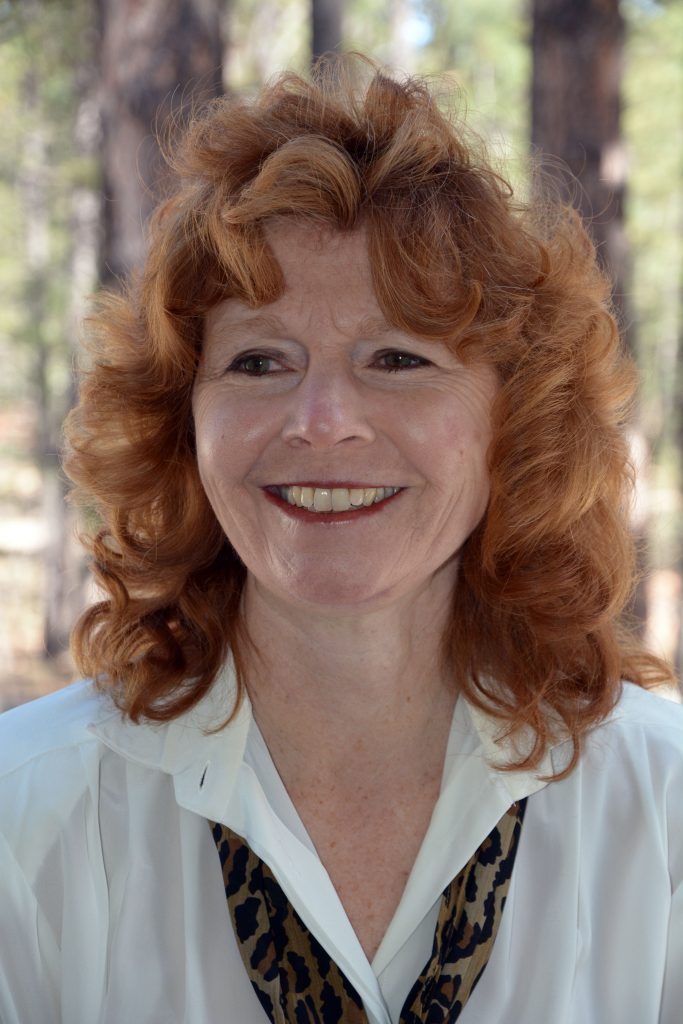
Julie Bradley special contribution for Guaymas San Carlos Guide and Lifestyle 2026
The dolphins arrived at dawn, thirty strong, maybe more. It was impossible to count them as they swam and wove through the wave created by our bow as we sailed through the water. I lay on the foredeck of our sailboat, leaning my head out as far as I could safely go. They were so close I could see the intelligence in their eyes when they rolled to look at me, could hear the sharp whistle of their breath and clicking sounds before they submerged again.
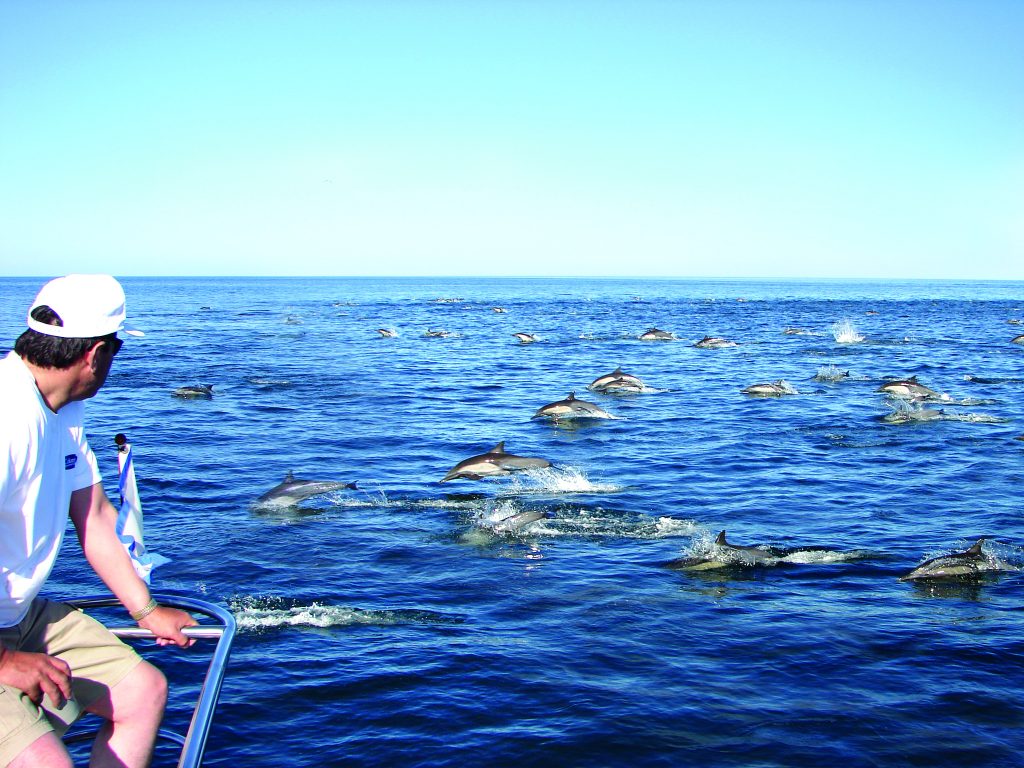
“Julie! Look starboard!”
I turned to see what had pulled the urgency into my husband’s voice. At first, I saw only the blue water, so clear I could see twenty feet down to the darker water at depth. Then the water moved, not wind-driven, but from beneath. A gray whale surfaced fifty yards off our beam, her massive head breaking the surface like a small continent rising from the sea. She exhaled, and her spray with her distinctive smell misted over the deck.
The dolphins moved on to continue their games elsewhere, but she stayed with us for twenty minutes, that whale, keeping pace with our five knot crawl up the coast. I sat on the cabin top, my legs dangling over the side, watching this impossible life in a sea I hadn’t even known existed six months ago in our Arizona jobs, dreaming of exactly this.
The wind picked up as it always did by afternoon, filling our sails with the kind of steady fifteen-knot breeze that makes you believe you might actually know what you’re doing. Ahead, the mountains of the Sonoran Desert plunged straight into the water, and somewhere in those ridges and canyons, a cove waited where we would anchor tonight. There would be no one there but us, the water so clear we could count the fish swimming beneath our hull, and if we were lucky, a weathered fisherman in a panga would motor by at sunset with a dorado so fresh it would still be changing colors.
This was our training ground, this Sea of Cortez, our weekend escape from the ordinary. We had no idea then that one day we wouldn’t want to leave.
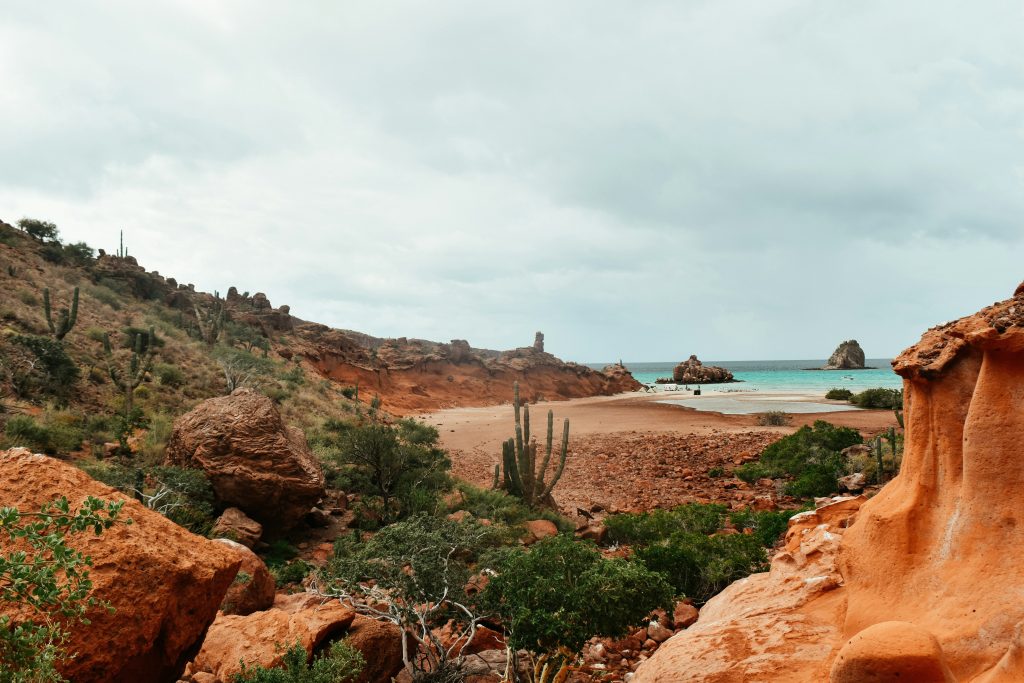
The cove we found that evening was nothing more than a sandy indent in the coastline, protected from the afternoon chop by a rocky point studded with cardón cacti that reached toward the sky with upraised arms. Dropping anchor in twelve feet of crystal water, the chain paying out with that satisfying rattle that means you’re home for the night.
I dove off the stern to make sure the anchor was properly set, unable to resist the water’s invitation. Warmer on the surface, it grew cooler as I kicked deeper, my eyes wide open in goggles, watching the sandy bottom ripple in the current. A school of sergeant majors—yellow bodies striped with black—scattered at my approach, then reformed behind me like I was just a bigger fish passing through their world.
By the time I climbed back aboard, the sun was falling, painting the western horizon in shades of pink and copper. My husband had rigged a handline off the stern, the one taught to us by Miguel, the fisherman from Guaymas who’d taken pity on our ignorance and showed us how to catch dinner the way his grandfather had taught him. No rod, no reel—just a wooden frame wound with heavy monofilament, a lead weight, and a baited hook.
“Feel that?” he’d asked, handing me the line.
I did. The distinct tap-tap-tap of something interested but cautious.
“Let him take it,” he said, and I remembered Miguel’s words exactly: Déjalo comer primero. Let him eat first.
When I finally pulled, the weight on the other end transformed. The line grew taut and I had to grip tighter, letting it tire itself against the steady pressure, afraid to jerk and lose it. Five minutes later, a cabrilla broke the surface, and my husband netted it in one smooth motion.
We ate that fish grilled over our tiny propane stove, seasoned with nothing but lime salt and butter. It tasted like everything we’d been missing in our desert-bound lives. Like the future we were teaching ourselves to reach for, one weekend at a time.
The Sea of Cortez didn’t make it easy. It tested us with afternoon winds that arrived like clockwork, building from gentle to demanding in the space of an hour. It humbled us with anchorages that looked perfect until the wind shifted at midnight. On that Sea we’d learned to work together when fatigue and fear made us want to give up on ourselves.
On a holiday weekend in November, we anchored in a bay near Guaymas where the water was thick with baitfish, and beneath them, the predators. Pelicans folded their wings and plummeted like feathered bombs, hitting the water with explosive precision. Frigate birds wheeled overhead, their forked tails and crooked wings making them look like pirates of the air. And below it all, we could see the silver flash of Sierra, driving the baitfish toward the surface in a frenzy of hunger and survival.
That night, a panga motored close, and a man I’d never seen before held up a Bonita tuna so large it took both his arms to lift it. “¿Quieren pescado?” he called across the water.
We bought it and he filleted it right there in his boat, his knife moving with the practiced efficiency of a surgeon, the meat pink and fresh. We ate sashimi that night under a sky so crowded with stars it seemed impossible they could all fit up there, and I thought: This is what we’ve been working for. This.
We’d come to train for something bigger; a circumnavigation, a world voyage, the kind of adventure that required more skill than we possessed on those first sails down the coast. And it was true. Every weekend we spent in the Sea of Cortez made us better sailors, better partners, more confident in our ability to handle whatever the ocean might throw at us.
But the real gift wasn’t the sailing skills or the navigation practice or even the perfect anchorages. It was the realization that magic doesn’t exist somewhere out there, waiting to be found after years of preparation. It exists in the places you return to, in the communities that welcome you back, in the water that holds you and the people who teach you their secrets and the mornings when dolphins arrive unannounced to remind you that wonder is always available if you’re paying attention.
We did eventually leave. We sold nearly everything we owned, provisioned our boat, and pointed our bow toward the horizon. We crossed oceans and navigated through pirate waters and learned what it meant to be truly self-reliant in the middle of nowhere. We spent nearly eight years living aboard, and every single one of those adventures—the storms weathered, the cultures encountered, the fears overcome—had their roots in those weekend sails up and down the Sea of Cortez.
But here’s what I didn’t expect: we came back.
Not just to visit, but to stay. We bought a house in San Carlos, traded our sailboat for a powerboat because knees and shoulders don’t handle halyards the way they used to, and embedded ourselves in the community we’d only glimpsed as weekend sailors. We learned Spanish, joined the yacht club, helped organize regattas with sailors fr om Guaymas and Hermosillo. We attend social functions with Coast Guard and Naval officers, participate in community programs, and consider ourselves inexplicably lucky to call this place home.
One day, I believe, the Tetakawi silhouette will be recognized around the world as a symbol of natural beauty and adventure. But for now, it belongs to those of us who know its secrets; the dolphins that play in its shadow, the whales that pass by each season, the fishermen who work its waters with the same techniques their grandfathers used, and the newcomers like us who found something here they didn’t even know they were looking for.
We’ll never be able to give back as much as we’ve received from the beautiful people here. But we’re going to spend the rest of our lives trying.
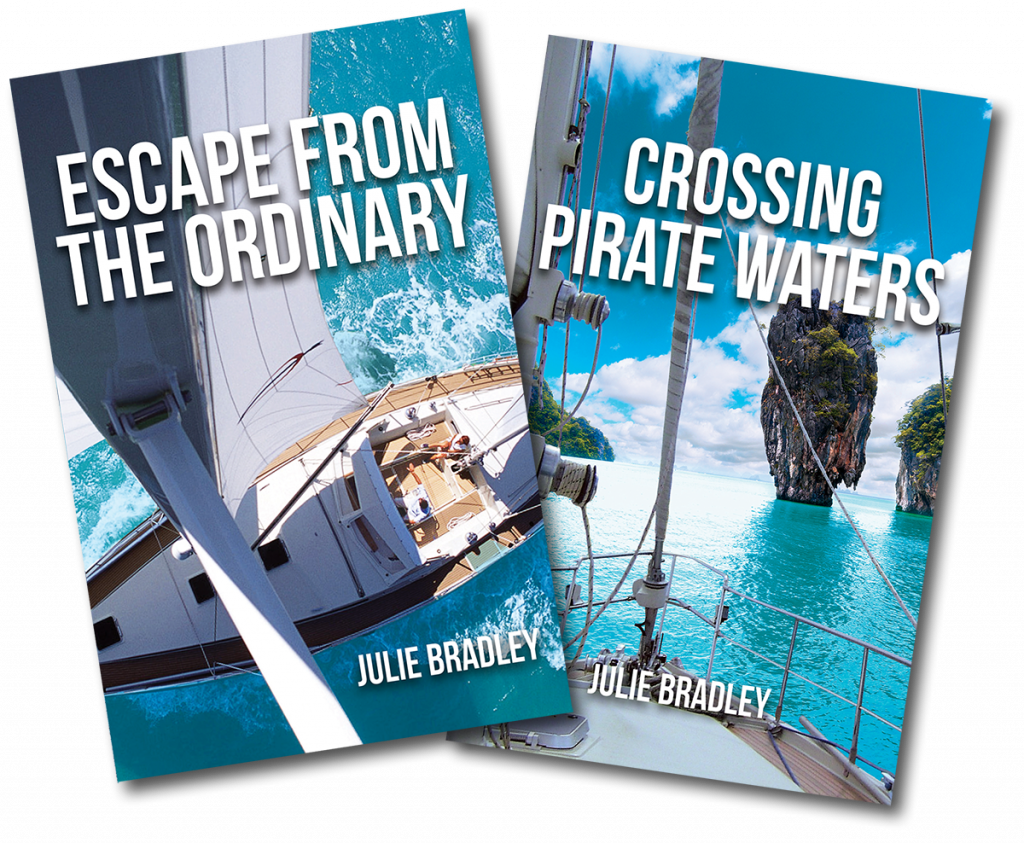
The journey that began with those uncertain weekend sails—the one I chronicled in Escape from the Ordinary—eventually carried us across the Pacific and Indian Oceans, through the pirate-infested waters of the Gulf of Aden (detailed in Crossing Pirate Waters), and around the world. Nearly eight years of living on the edge of our abilities, testing ourselves against the greatest classroom on earth. But none of that circumnavigation would have been possible without the Sea of Cortez. It gave us our sea legs and our confidence. More importantly, it gave us a place worth coming home to.
Julie Bradley Books
Julie nos comparte algunas de sus emocionantes experiencias y nos deja perplejos cuando dice: «Nunca podremos devolver tanto como hemos recibido de la maravillosa gente de aquí» y cuando sueña escribiendo: «Algún día, creo, la silueta de Tetakawi será reconocida en todo el mundo como símbolo de belleza natural y aventura».